
A Fusion of Academic Exchange and Culture in Kyoto
At JTB Communication Design (JCD), we handle a wide range of events, from corporate functions to international conferences. In this article, we share a case study of an academic conference we planned and managed in Kyoto.
-How Kyoto’s hospitality and culture enriched an academic exchange-
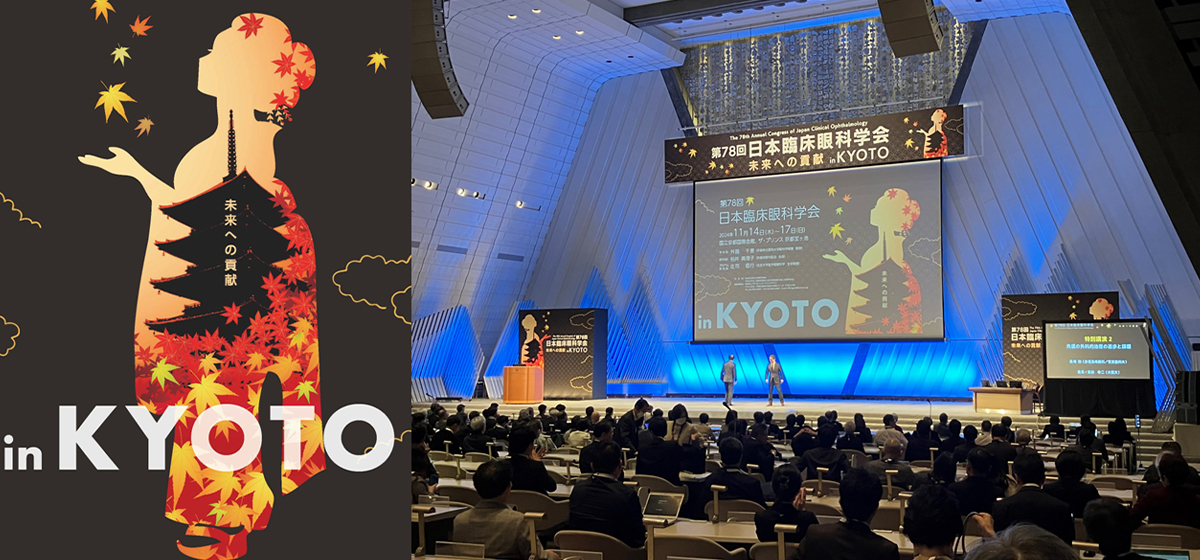 Conference Name: The 78th Annual Congress of Japan Clinical Ophthalmology
Date: 14th (Thu.) - 17th (Sun.) November 2024
Venue: Kyoto International Conference Center, The Prince Kyoto Takaragaike
Participants: 10,000
The 78th Annual Congress of Japan Clinical Ophthalmology was held for four days from 14th – 17th November 2024, in Kyoto, a city rich in history and tradition. The event brought together ophthalmology experts from all over the world to share cutting-edge knowledge. It was not only an opportunity to present academic results, but also, thanks to the unique hospitality that Kyoto is known for, a special experience for each participant.
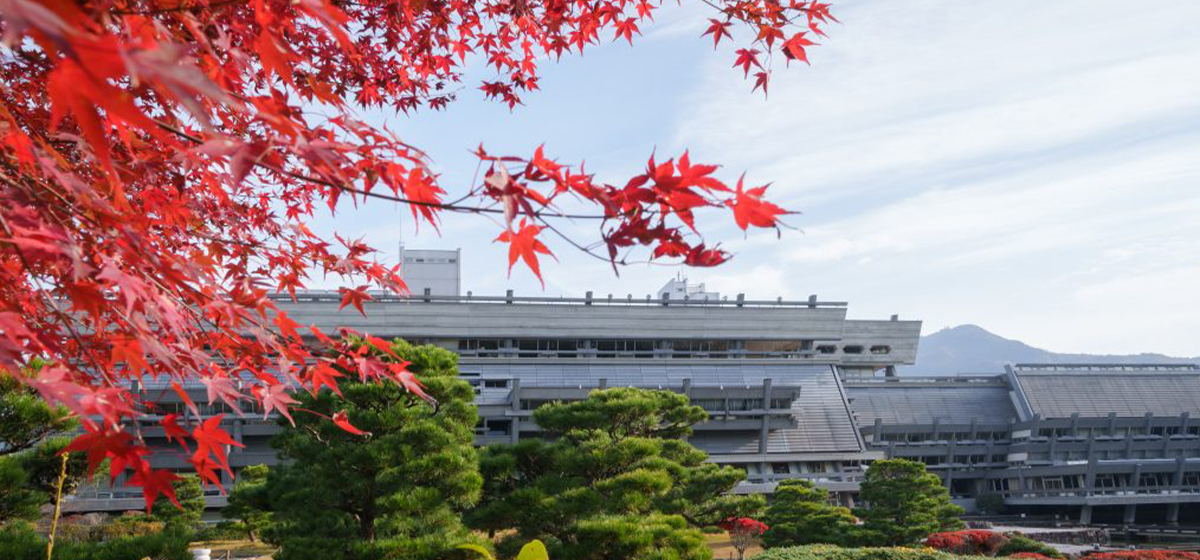 The main venue: Kyoto International Conference Center
Providing special value to support academic activities
Academic conferences are not just a place for sharing knowledge, but also a great opportunity for networking. The venue, Kyoto International Conference Center, blends modern architecture with natural beauty, creating a serene environment, ideal for concentration and academic discussion. During the event, participants were greeted by Kyoto's traditional culture and beautiful scenery, adding special value to support the participant’s activities.
In addition to the above, we would like to introduce five other distinctive aspects of Kyoto’s hospitality that contributed to the event.
① Large-scale decorative flower arrangement
A large flower arrangement was placed in the foyer where participants would move between venues. This provided a calming environment for those participants rushing to get to the venues and made the event even more memorable.
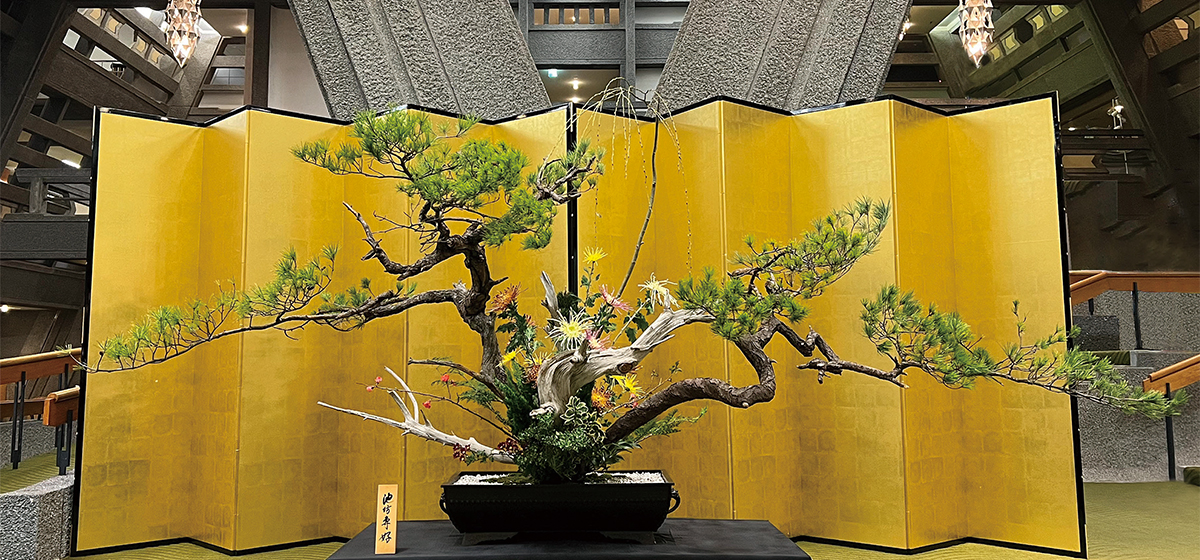 A particularly large flower arrangement installed in front of the first venue.
② Nighttime visit to Ninna-ji Temple
To allow participants to experience Kyoto's autumn leaves at their peak, we prepared a special free nighttime tour of Ninna-ji Temple, the head temple of the Omuro school of the Shingon Sect of Buddhism, which was registered as a UNESCO World Heritage Site in 1994.The tour included lectures and live music, and the dignified atmosphere of the temple created a special listening experience that was a little different from the academic conferences.
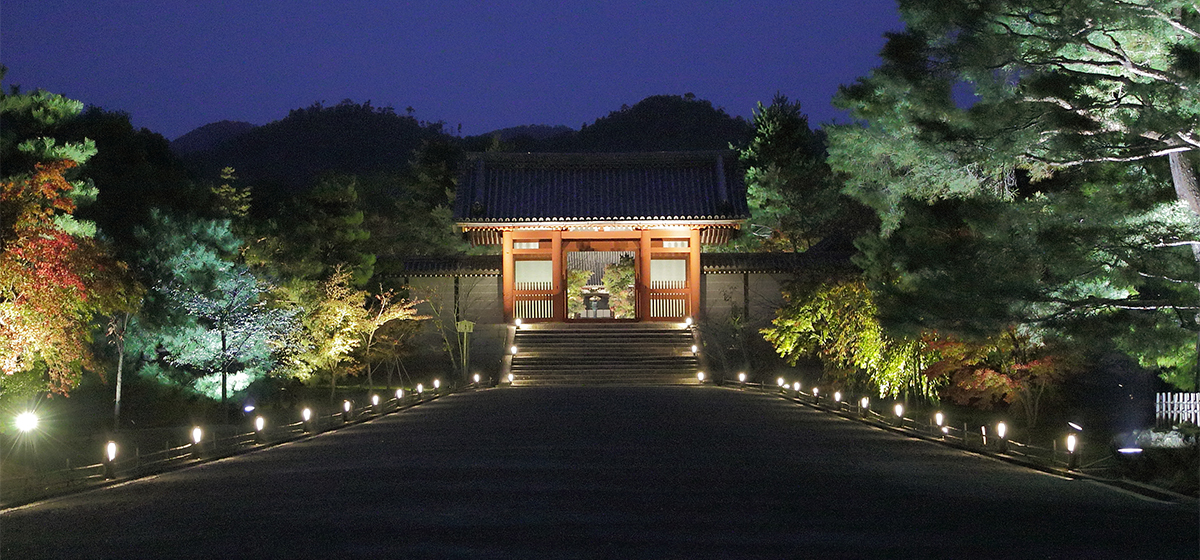 Illuminated inner gate of Ninna-ji Temple
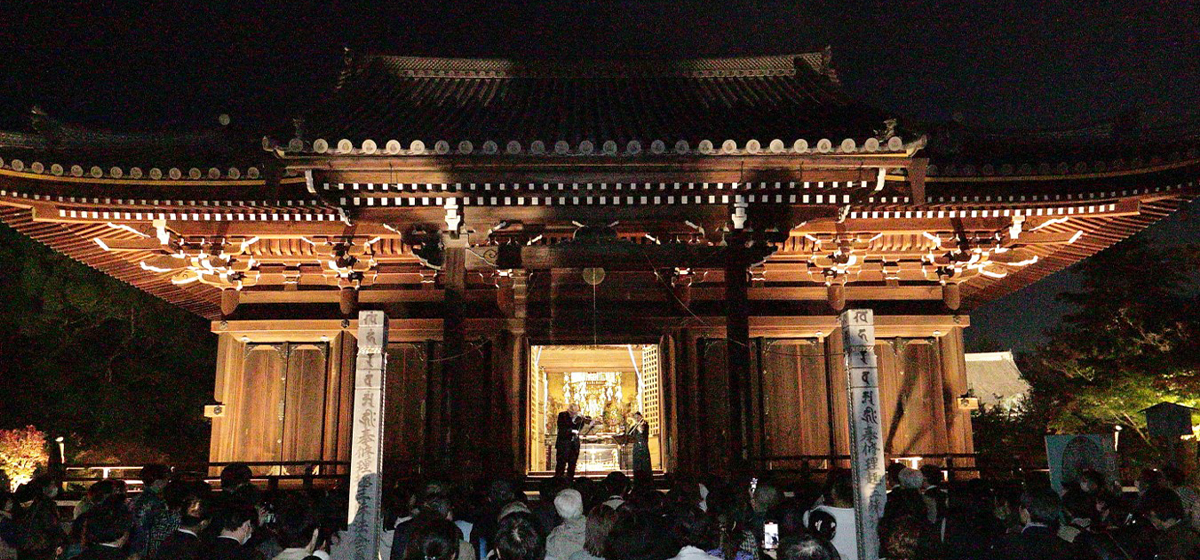 Live music at the Kannon-do Hall of Ninna-ji Temple
③ The Hospitality of Kyoto’s cuisine
Participants enjoyed Kyoto cuisine made with seasonal ingredients and decorated with Kyoto-style décor, satisfying both their taste buds and their hearts. The culinary hospitality provided a moment of relaxation between academic sessions.
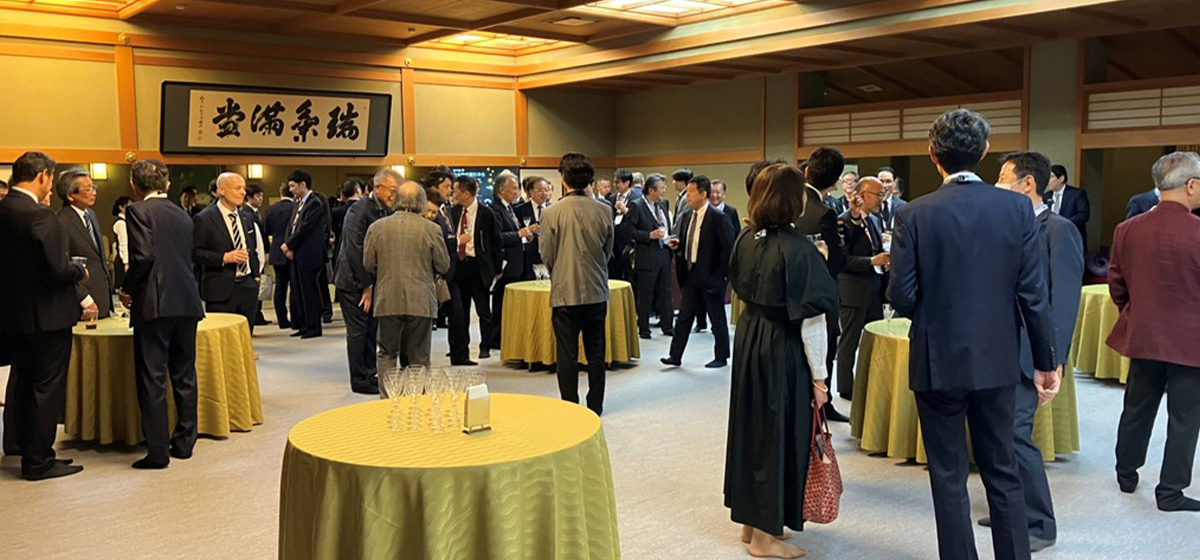 A Kyoto-style social gathering in a unique setting
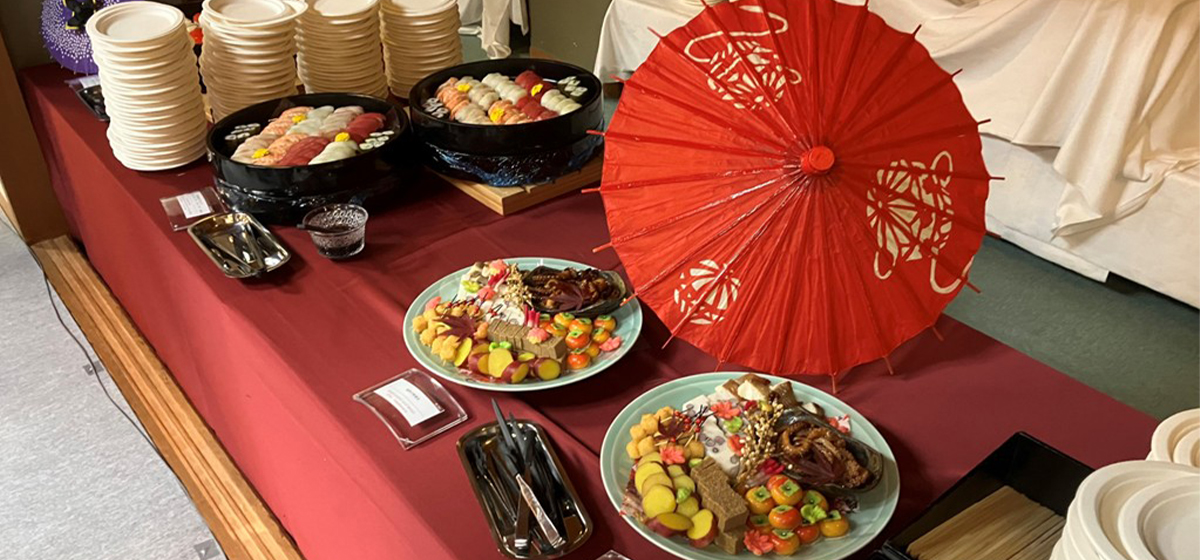 Cuisine prepared with the ingenuity of Kyoto
④ Provision of a hospitality room
A room overlooking Takaragaike Park was prepared to provide a relaxing space for participants. A refreshment service featuring famous Kyoto sweets was provided, giving participants a special moment of relaxation.
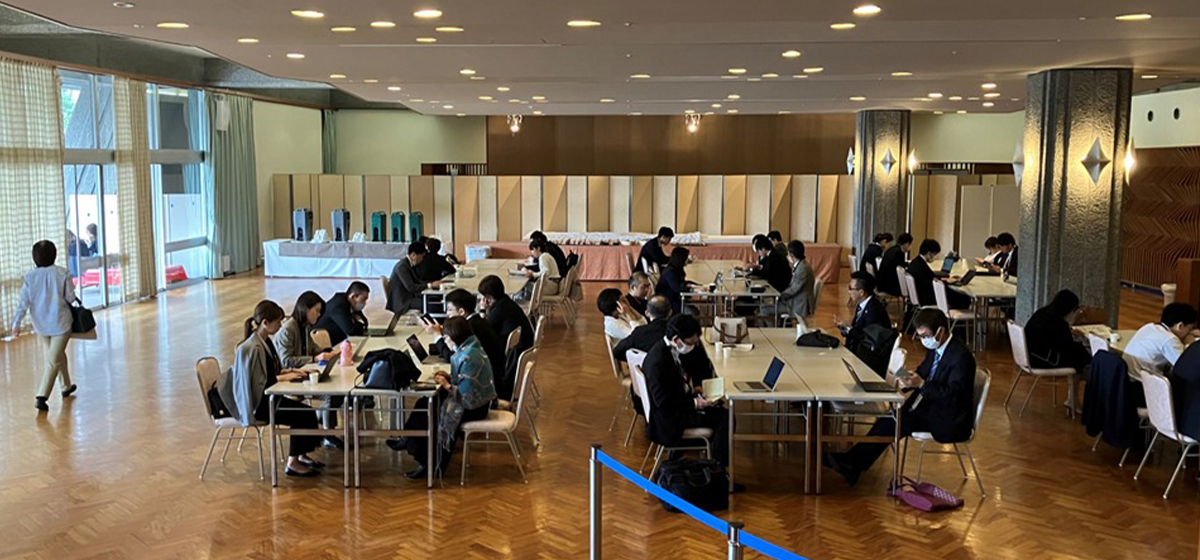 The hospitality room overlooking Takaragaike Park and the gardens
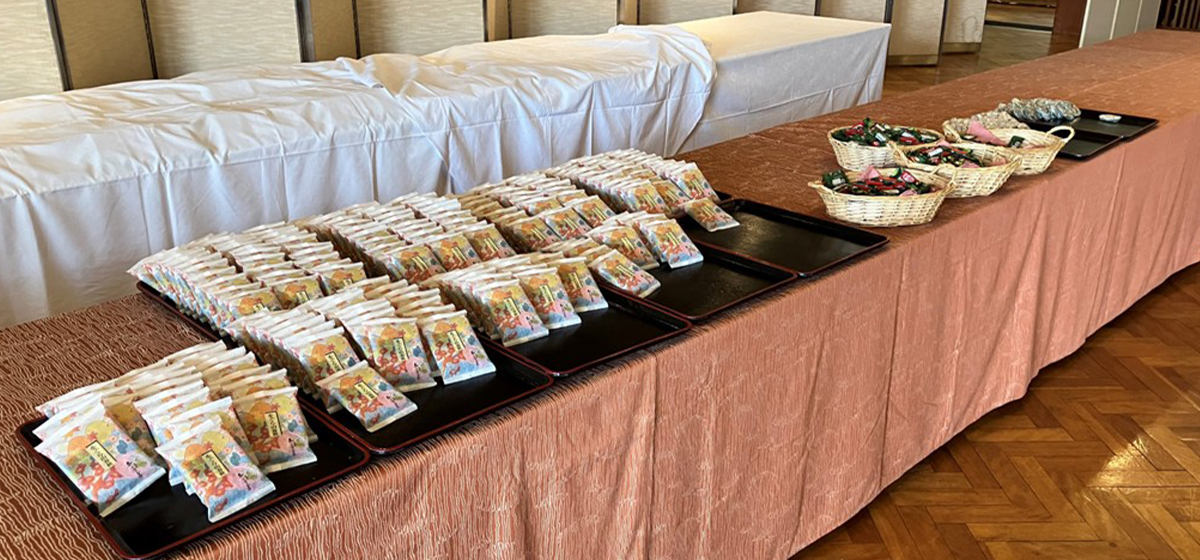 Kyoto's famous sweets
⑤ Stunning visuals with a Kyoto theme
The main visual for the conference was designed to convey the traditional beauty of Kyoto. The background features gentle colors and patterns that evoke the essence of Kyoto's nature and Japanese culture. The design conveys a warmth that embraces visitors. We believe that Kyoto’s distinctive warm hospitality and a feeling of eagerness for academic exchange were fully conveyed.
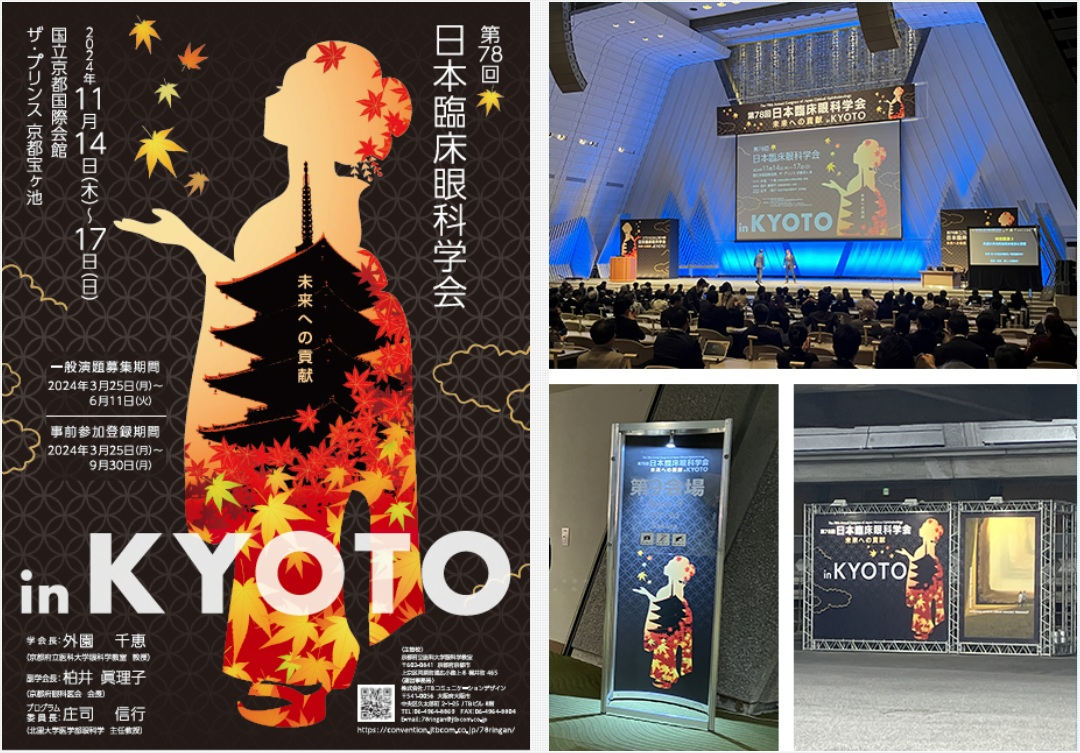 The main visual, used in posters and various designs depicts a Maiko
Decorations and various signs in the main venue that make use of the main visual
The purpose of hospitality at academic conferences
This academic conference saw discussions aimed at solving new challenges in ophthalmology. We believe the traditional Japanese spirit of hospitality enriched these discussions, allowing all participants to interact comfortably and contributed to the success of the event.
Kyoto's hospitality is more than just a service; it is an expression of consideration for each individual participant. We hoped to enhance the quality of the academic exchange and through this, help in the making of new discoveries and the development of collaborative relationships. It also served as a great opportunity to convey the appeal of Japanese culture to international participants.
We hope that this conference, which combined academic and cultural elements, left a deep impression on the participants and was a valuable opportunity that will contribute to the future development of ophthalmology.
Supported by:
• "The 78th Annual Congress of Japan Clinical Ophthalmology" President Chie Sotozono, M.D., Ph.D. (Professor & Chair, Department of Ophthalmology, Kyoto Prefectural University of Medicine, Kyoto)
• Ninna-ji Temple, the head temple of the Omuro school of the Shingon Sect of Buddhism
• Kyoto International Conference Center
-How Kyoto’s hospitality and culture enriched an academic exchange-
Conference Name: The 78th Annual Congress of Japan Clinical OphthalmologyDate: 14th (Thu.) - 17th (Sun.) November 2024
Venue: Kyoto International Conference Center, The Prince Kyoto Takaragaike
Participants: 10,000
The 78th Annual Congress of Japan Clinical Ophthalmology was held for four days from 14th – 17th November 2024, in Kyoto, a city rich in history and tradition. The event brought together ophthalmology experts from all over the world to share cutting-edge knowledge. It was not only an opportunity to present academic results, but also, thanks to the unique hospitality that Kyoto is known for, a special experience for each participant.
The main venue: Kyoto International Conference CenterProviding special value to support academic activities
Academic conferences are not just a place for sharing knowledge, but also a great opportunity for networking. The venue, Kyoto International Conference Center, blends modern architecture with natural beauty, creating a serene environment, ideal for concentration and academic discussion. During the event, participants were greeted by Kyoto's traditional culture and beautiful scenery, adding special value to support the participant’s activities.
In addition to the above, we would like to introduce five other distinctive aspects of Kyoto’s hospitality that contributed to the event.
① Large-scale decorative flower arrangement
A large flower arrangement was placed in the foyer where participants would move between venues. This provided a calming environment for those participants rushing to get to the venues and made the event even more memorable.
A particularly large flower arrangement installed in front of the first venue.② Nighttime visit to Ninna-ji Temple
To allow participants to experience Kyoto's autumn leaves at their peak, we prepared a special free nighttime tour of Ninna-ji Temple, the head temple of the Omuro school of the Shingon Sect of Buddhism, which was registered as a UNESCO World Heritage Site in 1994.The tour included lectures and live music, and the dignified atmosphere of the temple created a special listening experience that was a little different from the academic conferences.
Illuminated inner gate of Ninna-ji Temple
Live music at the Kannon-do Hall of Ninna-ji Temple③ The Hospitality of Kyoto’s cuisine
Participants enjoyed Kyoto cuisine made with seasonal ingredients and decorated with Kyoto-style décor, satisfying both their taste buds and their hearts. The culinary hospitality provided a moment of relaxation between academic sessions.
A Kyoto-style social gathering in a unique setting
Cuisine prepared with the ingenuity of Kyoto④ Provision of a hospitality room
A room overlooking Takaragaike Park was prepared to provide a relaxing space for participants. A refreshment service featuring famous Kyoto sweets was provided, giving participants a special moment of relaxation.
The hospitality room overlooking Takaragaike Park and the gardens
Kyoto's famous sweets⑤ Stunning visuals with a Kyoto theme
The main visual for the conference was designed to convey the traditional beauty of Kyoto. The background features gentle colors and patterns that evoke the essence of Kyoto's nature and Japanese culture. The design conveys a warmth that embraces visitors. We believe that Kyoto’s distinctive warm hospitality and a feeling of eagerness for academic exchange were fully conveyed.
The main visual, used in posters and various designs depicts a MaikoDecorations and various signs in the main venue that make use of the main visual
The purpose of hospitality at academic conferences
This academic conference saw discussions aimed at solving new challenges in ophthalmology. We believe the traditional Japanese spirit of hospitality enriched these discussions, allowing all participants to interact comfortably and contributed to the success of the event.
Kyoto's hospitality is more than just a service; it is an expression of consideration for each individual participant. We hoped to enhance the quality of the academic exchange and through this, help in the making of new discoveries and the development of collaborative relationships. It also served as a great opportunity to convey the appeal of Japanese culture to international participants.
We hope that this conference, which combined academic and cultural elements, left a deep impression on the participants and was a valuable opportunity that will contribute to the future development of ophthalmology.
Supported by:
• "The 78th Annual Congress of Japan Clinical Ophthalmology" President Chie Sotozono, M.D., Ph.D. (Professor & Chair, Department of Ophthalmology, Kyoto Prefectural University of Medicine, Kyoto)
• Ninna-ji Temple, the head temple of the Omuro school of the Shingon Sect of Buddhism
• Kyoto International Conference Center